Category Archives: Data analysis

Keywords are the key to success in online marketing

Person using keywords to search on a website

Keywords have been the dominant feature of all my research into online marketing recently. It occurred to me that they are the number one driver that connects businesses to customers or audiences. This has huge implications for the creation of web content because keywords need to be at the very centre of it.

There are four main ways that a web user will find a website. People may arrive at it directly if they know the web address. Or they may be referred from another website that has a direct link. Then there’s paid search, which are search results from advertising. And finally there’s organic search. Over 90% of adults use search on the internet and thus it is the dominant director of traffic on the web. Continue reading
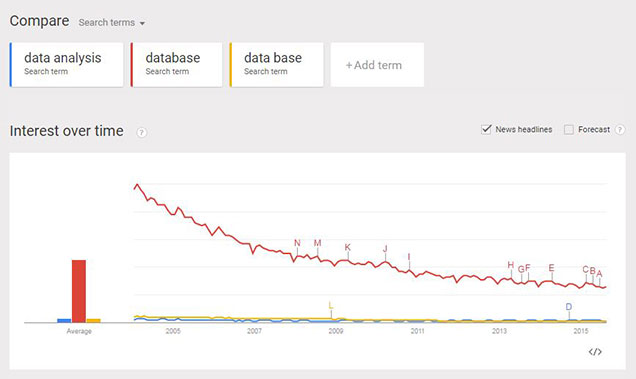
Database or data base? It’s all in the data analysis.

Google Trends graph

google.com/trends graph

I’m hooked on data analysis. My journey started with my love of databases – those wonderful repositories of information on our primary audiences. Then along came Google Analytics. Or should I say, I finally caught up with it.

For those of you who are uninitiated, Google Analytics is an awesome tool that allows you to track visitor behaviour on your website. You simply place some Google code on your website and Google will collect information on what pages people visit, how long they stayed and a whole range of other useful data.

One of the things I discovered is that more than half the traffic going to websites does so through search. And what makes your site most likely to get clicked? It will if it appears on the first page of organic search results. If you’ve been playing around with websites, you’d know that something called “search engine optimisation” is the most important factor in ensuring your site has a high ranking. What this boils down to is having search terms (called “key words”) that are not only relevant to the content on your website, but popular with people doing searches. Continue reading